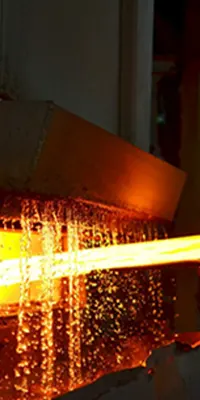
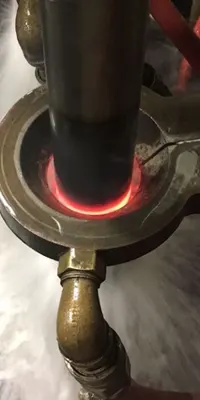
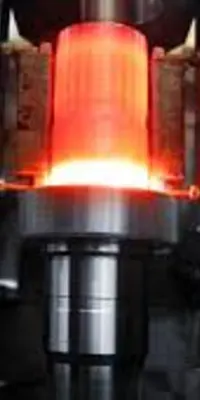
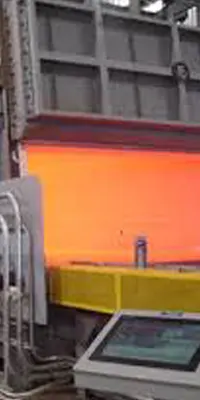
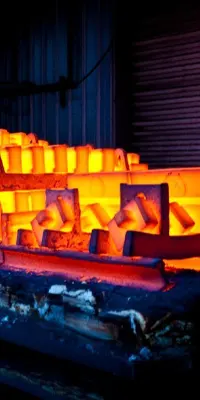
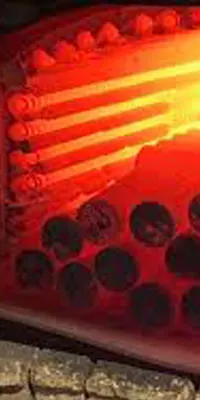
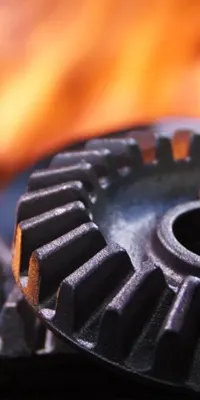
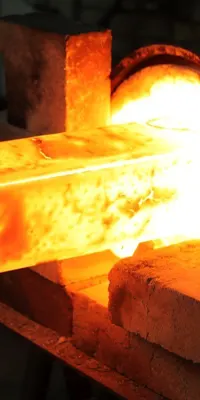
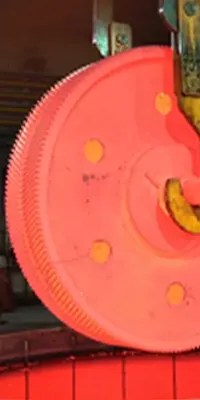
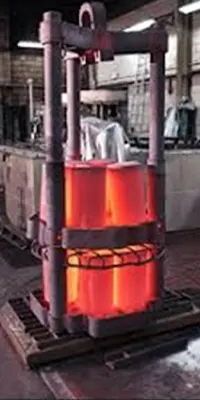
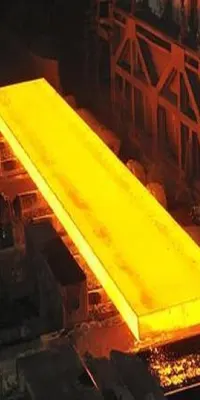
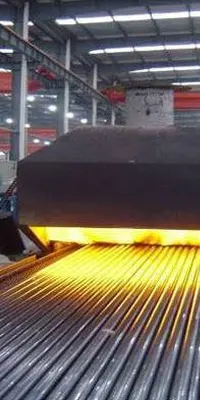
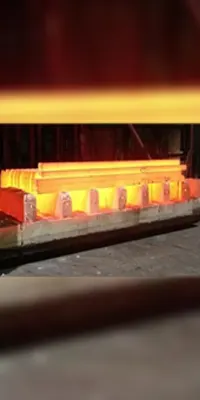
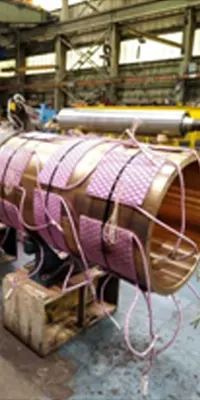
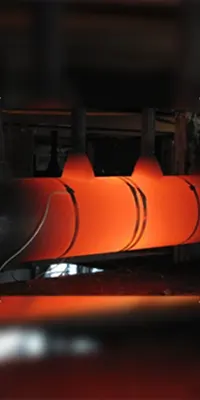
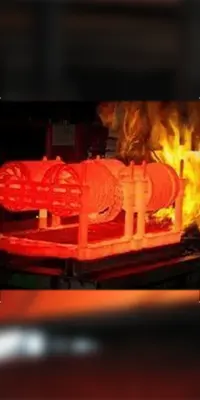
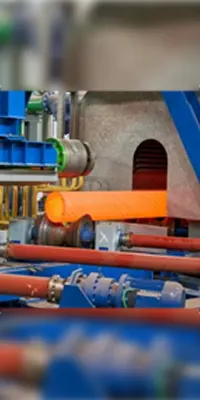
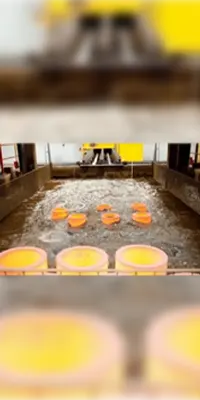
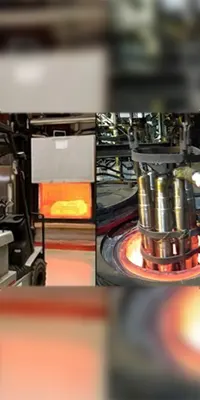
Carbon is diffused into the surface layer of low-carbon steel components at elevated temperatures to create a hardened, wear-resistant outer case.
The process maintains a tough and ductile core, making it ideal for gears, shafts, and heavy-load mechanical parts.
High Surface Hardness
Improved Fatigue Life
Wear Resistance
Strong Core Strength
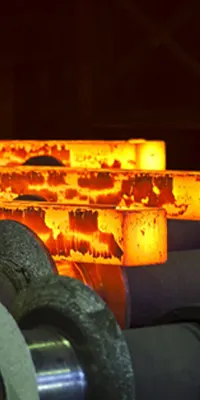
A two-step heat treatment process that enhances the hardness, strength, and fatigue resistance of metal components.
Hardening involves heating to high temperatures followed by rapid cooling, while tempering reduces brittleness to achieve the desired toughness and durability.
Increased Hardness
Enhanced Strength
Improved Fatigue Life
Controlled Toughness
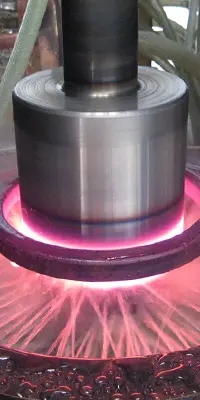
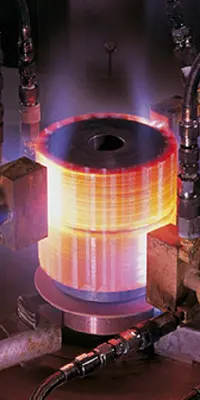
A rapid and precise surface hardening process designed to strengthen specific areas of metal components.
Electromagnetic induction heats selected zones, followed by immediate quenching to provide localized wear resistance on complex geometries.
Selective Surface Hardening
Rapid Heating & Quenching
Localized Wear Resistance
Ideal for Complex Components
A heat treatment process that refines grain structure and improves the mechanical properties of steel components.
By heating and air cooling, impurities are reduced and a uniform microstructure is achieved, making it ideal for castings and forgings.
Refined Grain Structure
Improved Ductility
Enhanced Toughness
Uniform Microstructure
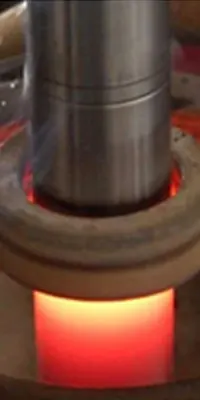
A surface hardening solution that strengthens the outer layer of steel while maintaining a tough core.
Techniques such as flame and induction heating are used to harden specific areas without affecting the internal structure of the component.
Hardened Outer Surface
Tough Core Retention
Flame & Induction Methods
Localized Heat Control
A specialized annealing process primarily used for high-carbon steels exceeding 0.8% carbon content.
The treatment converts the microstructure into a spheroidal form, significantly enhancing machinability and improving formability for further processing.
Ideal for High-Carbon Steels
Improved Machinability
Refined Spheroidal Structure
Enhanced Formability
A specialized thermal cycle designed to achieve an optimal balance of strength and toughness in alloy steel components.
The process involves controlled quenching followed by tempering to refine microstructure and deliver reliable mechanical performance under demanding conditions.
Balanced Strength & Toughness
Refined Microstructure
Enhanced Mechanical Properties
Ideal for Alloy Steels
A heat treatment process designed to achieve maximum softness and improved ductility in steel components.
By heating the material above its critical temperature and allowing controlled cooling, a refined microstructure is produced for enhanced workability and performance.
Maximum Softness
Improved Ductility
Refined Microstructure
Enhanced Workability
A controlled thermal process designed to reduce internal residual stresses in metal components.
Commonly applied after heavy machining, welding, or cold working to improve dimensional stability and prevent distortion during service.
Reduces Residual Stresses
Improves Dimensional Stability
Prevents Distortion
Ideal After Welding & Machining
A rapid cooling process used to achieve specific mechanical properties in metal components.
The heated workpiece is cooled in water, oil, or air immediately after hardening or carburizing cycles to enhance hardness and structural strength.
Rapid Cooling Process
Increased Hardness
Water, Oil & Air Cooling
Enhances Structural Strength